Halloween House: A Designer’s Review for Seasonal Stitching
As an embroidery designer who has spent countless hours digitizing and testing files, I approach every new machine embroidery design with a critical eye. It is not enough for a motif to look cute on a screen; it must hold up under the needle, survive the wash cycle, and appeal to the end customer. When I first loaded the Halloween House file into my software, I was immediately struck by its atmospheric potential. This is not just a generic pumpkin or ghost; it is a structured, architectural piece that captures the eerie spirit of the season with surprising nuance.
In this review, I am evaluating Halloween House from the perspective of real-world application. Whether you are an Etsy seller looking to expand your autumn catalog, a hobbyist creating personalized gifts, or a boutique owner curating seasonal decor, understanding how this design performs on actual fabric is crucial. Let’s dive into the details of layout, stitch quality, and practical usability.
First Impressions: Mood and Visual Personality
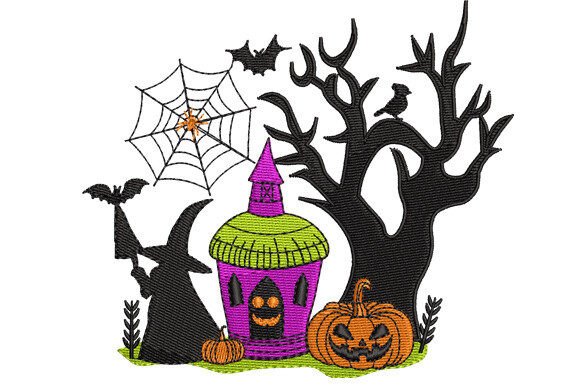
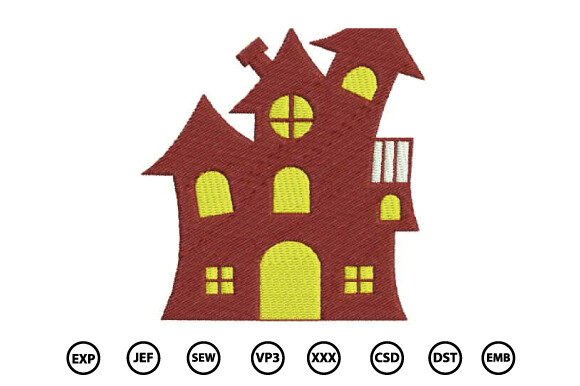
The immediate impression of Halloween House is one of whimsical spookiness. The silhouette is distinct, avoiding the clutter that often plagues complex holiday motifs. For a designer, clean lines are essential because they translate better into thread. The layout suggests a haunted cottage vibe, likely featuring peaked roofs, perhaps a crooked chimney, and windows that hint at a story within. This visual personality makes it versatile. It is not so terrifying that it alienates younger audiences, yet it is detailed enough to satisfy adults looking for sophisticated holiday embroidery.
The detail level appears balanced. In digital previews, we often see designs that are overly dense, promising richness but delivering stiffness. Halloween House seems to prioritize shape and shadow over excessive micro-detailing. This is a positive sign for production speed and fabric integrity. The theme naturally lends itself to a palette of deep purples, burnt oranges, midnight blues, and stark whites, allowing for creative freedom in selecting thread colors.
Real-World Application: From Screen to Stitch
To truly test a design, you must imagine it on a finished product. I recently considered using a similar architectural motif for a custom tote bag design intended for a local farmer’s market autumn event. Halloween House fits this scenario perfectly. On a canvas tote, the structural elements of the house provide a strong focal point. The design’s width likely accommodates standard hoop sizes well, making it ideal for medium-to-large home decor items or apparel.
Consider sweatshirt embroidery. A crewneck sweatshirt in heather grey or black provides an excellent backdrop for this motif. The contrast between the soft, textured fabric and the crisp lines of the house creates a high-quality, boutique feel. For custom apparel, placing this design on the left chest or as a larger back print can elevate a simple garment into a statement piece. Customers are drawn to items that feel unique and handcrafted, and a well-executed embroidery project like this delivers that perceived value.
For those running a craft business, versatility is key. This design could easily transition from apparel to home goods. Imagine it stitched onto a linen pillow cover for seasonal living room decor, or as an accent on a kitchen towel. The "hauntingly detailed" description suggests enough intricacy to reward close inspection, which is vital for items meant to be displayed in the home. It also works beautifully as an embroidered patch, allowing customers to buy the motif separately and apply it to jackets or bags later, expanding your small shop product range without increasing inventory complexity.
Technical Considerations and Fabric Compatibility
While the aesthetic appeal is strong, technical execution determines the success of the finished product. Here are specific areas where Halloween House requires careful attention:
- Fabric Texture and Stability: Architectural designs with straight lines and corners can pucker if the fabric is not properly stabilized. If you are stitching on a stretchy knit for a t-shirt, a cut-away stabilizer is non-negotiable. For woven fabrics like cotton or linen used in tote bags, a tear-away may suffice, but always test first.
- Stitch Density: Without seeing the exact file data, I advise checking the stitch density in your editing software. If the roof or walls are filled with dense fill stitch patterns, ensure your machine can handle the thickness. Too much density on thin fabric will cause perforation or stiffness.
- Small Details: If the design includes tiny windows or decorative trim, verify that these elements are not too small for your needle size. Tiny details can get lost or break during stitching, especially on textured fabrics like towels or fleece.
- Curved Surfaces: Stitching this on a cap requires caution. The flat, wide nature of a house design does not naturally conform to the curved front panel of a baseball cap unless the design is specifically digitized for caps. If using a standard embroidery file, stick to flat surfaces like patches, pillows, or apparel panels.
For baby embroidery, such as on a onesie or blanket, ensure that any satin stitch borders are not too raised or scratchy against sensitive skin. You might need to adjust the underlay or choose softer threads. Always wash-test your samples to ensure the design holds up without shrinking or distorting.
Enhancing Product Value and Brand Consistency
Using a high-quality design like Halloween House directly impacts customer trust. When a buyer sees clean, consistent stitching with no thread breaks or puckering, they perceive the item as professional. This is crucial for commercial embroidery and building a reputable brand. A messy stitch-out can damage your reputation, while a crisp, well-executed design encourages repeat business and positive reviews.
From a marketing standpoint, this design offers excellent opportunities for printable mockup creation. Because the shape is recognizable and thematic, it photographs well for online listings. You can showcase it on various backgrounds to appeal to different segments of your audience. Whether you are selling the digital embroidery file itself or the physical handmade product, the visual appeal of the house motif serves as a strong hook.
Practical Designer Notes for Best Results
Before you commit to production, follow these steps to ensure the best outcome with Halloween House:
- Test on Scrap Fabric: Never stitch a new design directly on your final product. Use the same type of fabric and stabilizer you plan to use for the sale item.
- Check Thread Contrast: Experiment with different color combinations. While traditional Halloween colors work, consider monochromatic schemes (e.g., white on black) for a modern, ghostly effect.
- Review Licensing: If you plan to sell items made with this design, confirm the license terms. Most designers allow commercial use for physical items, but restrictions may apply to reselling the design assets or applique design files themselves.
- Inspect Small Corners: Look closely at the roof peaks and window corners in your test stitch. If they are rounded or messy, you may need to adjust tension or use a sharper needle.
- Verify Hoop Size: Ensure the design fits comfortably within your hoop with adequate margin for clamping. Do not crowd the edges.
In conclusion, Halloween House is a compelling addition to any seasonal collection. Its balance of detail and clarity makes it suitable for a wide range of applications, from personalized gifts to boutique merchandise. By paying attention to fabric choice, stabilization, and stitch quality, you can leverage this design to create products that are not only spooky but also professionally crafted and commercially viable. Happy stitching!